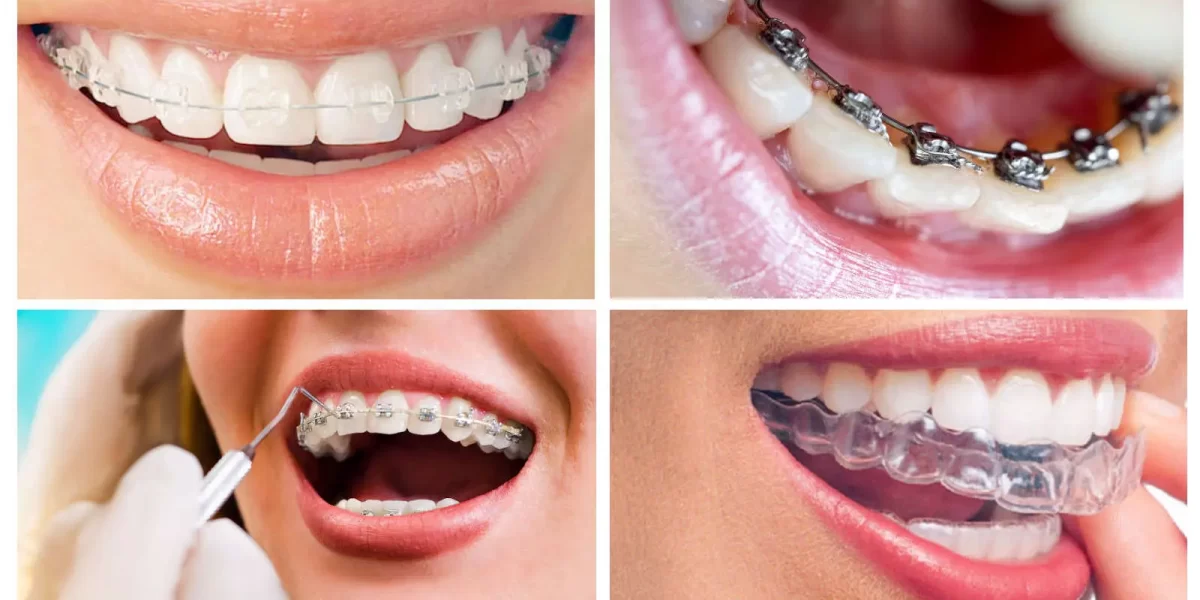
Braces have become one of the most common and effective dental treatments for people of all ages. Whether it is to correct crooked teeth, close unwanted gaps, or improve bite alignment, braces play a vital role in achieving a healthier and more attractive smile. In this guide, we will explore the different types of braces for teeth and cost, compare their features, and help you understand which option may be best for your needs.
Different Types of Braces for Teeth and Cost
Choosing the right types of braces for teeth and cost is essential for achieving an attractive smile. Each type of braces offers unique features, advantages, and price points:-
Metal Bracket Braces
Traditional metal braces are the most widely used and affordable type. They use stainless steel brackets and wires to gradually move teeth into position.
- Pros: Strong, effective for complex cases, usually the cheapest.
- Cons: Noticeable appearance, may cause irritation in the beginning.
- Cost Range: $3,000 – $7,000 (depending on location and treatment length).
Ceramic Braces
Ceramic braces use clear or tooth-colored brackets that blend with your natural teeth.
- Pros: Less noticeable than metal braces, effective for most cases.
- Cons: More expensive than metal, brackets can stain if not cared for properly.
- Cost Range: $4,000 – $8,000.
Lingual Braces
Placed behind the teeth, lingual braces are completely hidden when you smile.
- Pros: Invisible from the outside, effective for most treatments.
- Cons: Can be uncomfortable at first, harder to clean, more expensive.
- Cost Range: $8,000 – $10,000.
Self-Ligating Braces
These braces use a special clip instead of elastic ties to hold the wire in place.
- Pros: Less friction, shorter treatment time in some cases, easier to clean.
- Cons: Still visible, though smaller than traditional metal braces.
- Cost Range: $4,000 – $7,500.
Clear Aligners
Clear aligners (such as Invisalign) are removable trays made of transparent plastic.
- Pros: Nearly invisible, removable for eating and brushing, very comfortable.
- Cons: Not ideal for severe cases, requires discipline to wear 20–22 hours a day.
- Cost Range: $3,500 – $8,500.
Selecting the right type of braces for teeth hinges on individual needs, preferences, and budget. Understanding the differences between the Types of Braces for Teeth and Cost can help you make an informed decision.
Comparing Types of Braces for Teeth and Cost
When comparing braces, the main differences lie in visibility, comfort, treatment time, and price.
| Type of Braces | Visibility | Comfort | Average Cost | Best For |
| Metal Braces | High | Moderate | $3,000–$7,000 | Complex & affordable treatment |
| Ceramic Braces | Medium | Moderate | $4,000–$8,000 | Cosmetic concerns |
| Lingual Braces | Invisible | Low | $8,000–$10,000 | Aesthetic, hidden option |
| Self-Ligating Braces | High | Higher | $4,000–$7,500 | Faster treatment |
| Clear Aligners | Invisible | Very High | $3,500–$8,500 | Mild to moderate cases |
Factors That Affect the Types of Braces for Teeth and Cost
When considering orthodontic treatment, several factors influence both the choice of braces and their associated costs. Understanding these factors can help you make an informed decision about your dental care.
1. Severity of Dental Issues
The complexity of your orthodontic needs plays a significant role in determining the type of braces required.
- Impact: More severe misalignments may necessitate more advanced options like lingual braces or self-ligating braces, which can be more expensive.
2. Type of Braces
Different types of braces (metal, ceramic, lingual, self-ligating, clear aligners) have varying costs.
- Impact:
- Metal braces are typically the most cost-effective.
- Ceramic and lingual braces usually come at a premium due to their aesthetics and customization.
3. Treatment Duration
The length of time you will need to wear braces affects overall costs.
- Impact: Longer treatment times can increase overall costs, particularly for types that require regular adjustments.
4. Location
The geographical area where you receive treatment can influence costs.
- Impact: Urban areas often have higher living costs, which can translate to higher fees for orthodontic services.
5. Orthodontist’s Experience
The qualifications and experience of the orthodontist can affect pricing.
- Impact: Highly experienced orthodontists may charge more for their expertise, but this can also lead to better outcomes.
6. Insurance Coverage
Dental insurance plans vary widely in what they cover regarding orthodontic treatment.
- Impact: Patients with insurance that covers orthodontics may pay significantly less out-of-pocket, affecting the overall cost.
7. Maintenance and Follow-Up Care
The need for follow-up visits and maintenance can add to the overall cost.
- Impact: Some braces require more frequent adjustments, which can increase the total expenditure over time.
8. Personal Preferences
Aesthetic considerations and personal comfort can influence the choice of braces.
- Impact: Patients who prioritize aesthetics may opt for ceramic or clear aligners, which typically carry higher costs.
Common Dental Problems Braces Can Fix
Braces are a versatile orthodontic tool that can address various dental issues, improving both the alignment of teeth and overall oral health. Here are some common dental problems that braces can effectively fix:
1. Crowding
Crowding occurs when there is insufficient space in the dental arch for all the teeth, causing them to overlap or be misaligned.
How Braces Help:
Braces can gradually shift teeth into their proper positions, creating enough space in the mouth for a straighter smile.
2. Bite Issues
Bite issues, such as overbites, underbites, and crossbites, occur when the upper and lower teeth do not align correctly.
- Overbite: The upper front teeth significantly overlap the lower front teeth.
- Underbite: The lower teeth protrude beyond the upper teeth.
- Crossbite: Some upper teeth sit behind lower teeth.
How Braces Help:
Braces adjust the positions of the teeth and jaws, correcting the bite and promoting proper alignment for better function and aesthetics.
3. Gaps Between Teeth
Gaps, or diastemas, occur when there is excessive space between two or more teeth, which can be caused by missing teeth or genetic factors.
How Braces Help:
Braces can close gaps by moving the teeth closer together, resulting in a more uniform dental arch.
4. Misalignment
Misalignment refers to teeth that are not in their proper position, which can affect both appearance and function.
How Braces Help:
Braces can realign misaligned teeth, enhancing the smile and ensuring that teeth function correctly during biting and chewing.
5. Protruding Teeth
Protruding teeth are those that extend outward from the dental arch, often affecting the overall aesthetics of the smile.
How Braces Help:
Braces can pull back protruding teeth into a more harmonious position with the rest of the dental arch.
Types of Braces for Gap Teeth
If your main concern is gap teeth, most types of braces can close spaces effectively.
- Metal and ceramic braces are often the fastest solutions.
- Clear aligners are effective for mild to moderate gaps.
- Lingual braces can also be used, but treatment may take longer.
- Average treatment time: 6–18 months depending on the size of the gaps.
Braces for 8 Year Olds: Pros, Cons & Costs—Full Guide
Choosing the Right Bracket Braces for Your Needs
When it comes to bracket braces (metal, ceramic, or self-ligating), consider the following:
- Budget: Metal is the cheapest, ceramic costs more.
- Appearance: Ceramic looks more natural, metal is more visible.
- Treatment goals: For complex corrections, metal or self-ligating braces are often recommended.
Kids Smile Dental Clinic – Where Healthy Smiles Begin
At KidzSmile Dental Clinic, we believe every smile deserves the best care. Our expert dentists provide advanced orthodontic solutions, including the latest types of braces for teeth and cost-effective treatments, specially tailored for Kids. With a focus on comfort, quality, and lasting results, we make every child’s dental journey easy and enjoyable—because your Kids’ smile is our priority.
FAQ
Do braces hurt?
Mild discomfort or soreness is common at first, but it usually fades in a few days.
How long does treatment usually last?
On average, 12–24 months depending on the case.
Can braces fix teeth in 1 year?
Yes, for mild to moderate cases; complex issues may take longer.
Which type of braces is best?
It depends on your needs: metal for affordability, ceramic for appearance, clear aligners for comfort and invisibility.
Is 5000 good for braces?
Yes, $5,000 is within the normal cost range for braces.
Understanding the different types of braces for teeth and cost helps you choose wisely. At Kids Smile Dental Clinic, expert orthodontists provide affordable and effective treatments tailored to your needs, ensuring a healthy and confident smile.